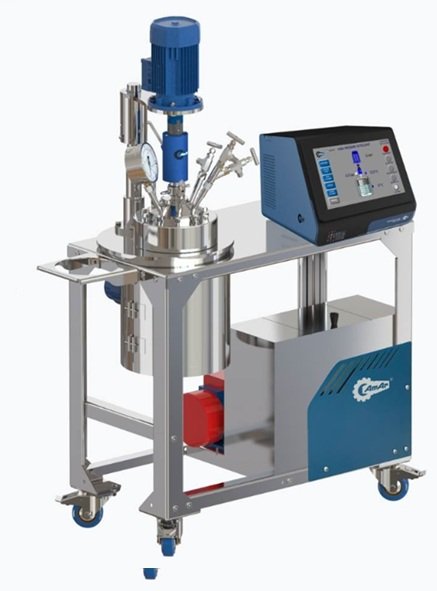
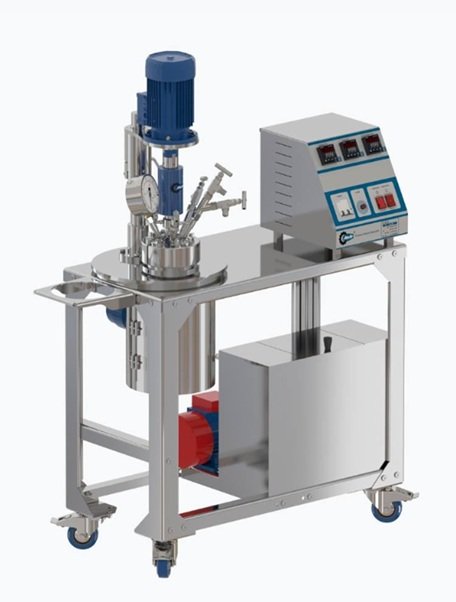
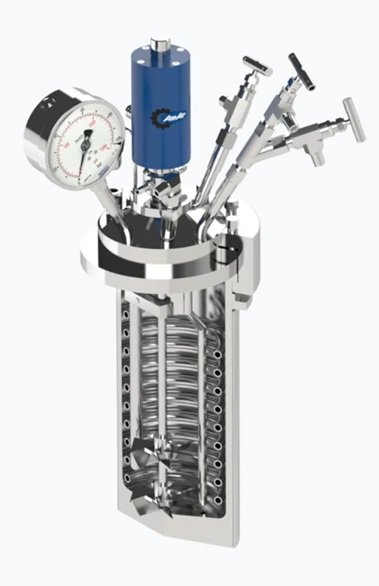
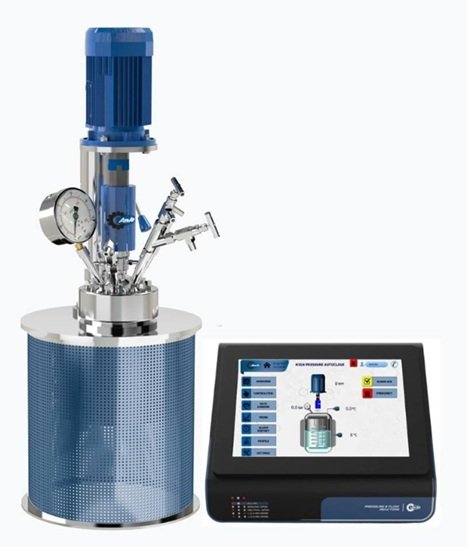
Stirred Pressure Reactor Autoclave
Volume: 100 ml to 100 L
Pressure: Up to 350 bar
Temperature: Up to 500 °C
Material: SS-316, Hastelloy, Inconel, Monel, Nickel, Titanium, Zirconium, & Tantalum lined
Certifications: ASME-U Stamp / PED certified reactors, CE / CSA, Ex-proof / ATEX certified systems
Automation: High-resolution programmable 10" touchscreen panel with SCADA software for data logging & wireless remote control
Auto-Cooling System: High-pressure water-based auto-cooling system for excellent temperature control & quick cooling from high temperatures
Head Mounting Options: Removable or fixed head with pneumatic / hydraulic raising, lowering, & tilting
Stirrer Options: Pitch blade turbine impeller, high mass transfer gas induction impeller, anchor & helix for various applications
Applications:
Alkylation, Amination, Bromination, Carboxylation, Catalytic Reduction, Chemical Synthesis, Chlorination, Dehydrogenation, Esterification, Ethoxylation, Halogenation, Hydrogenation, Material Synthesis, Methylation, Nitration, Oxidation, Ozonization, Polymerization, Sulphonation, etc.
Description:
A Stirred Pressure Reactor, or Autoclave, is a specialized reactor designed for conducting chemical reactions under elevated pressures and temperatures. A mechanical agitator ensures efficient mixing, enhances mass transfer, and accelerates reaction kinetics, while a jacket or internal cooling coil provides excellent heat transfer. Often constructed from high-strength, corrosion-resistant materials such as stainless steel or Hastelloy, these vessels are essential in process development and scale-up for operations such as hydrogenation, polymerization, and catalytic transformations.
They are widely used in the chemical, petrochemical, and pharmaceutical industries, serve as a key element of process intensification strategies, and can be operated in both batch and continuous modes.