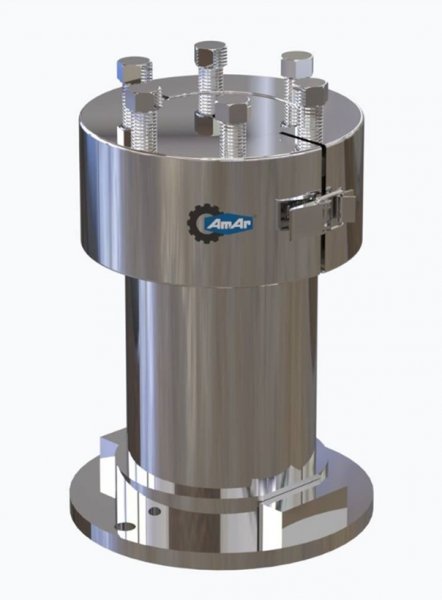
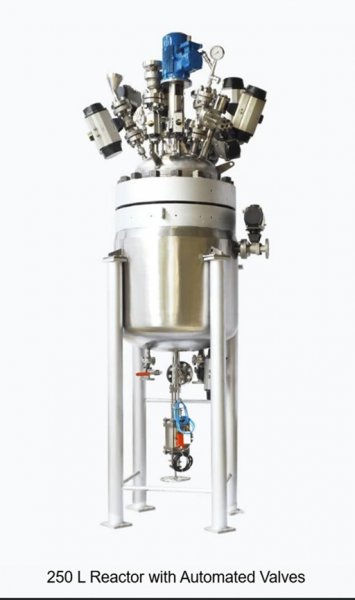
Alkylation, Amination, Bromination, Carboxylation, Catalytic Reduction, Chemical Synthesis, Chlorination, Dehydrogenation, Esterification, Ethoxylation, Halogenation, Hydrogenation, Material Synthesis, Methylation, Nitration, Oxidation, Ozonization, Polymerization, Sulphonation, etc.
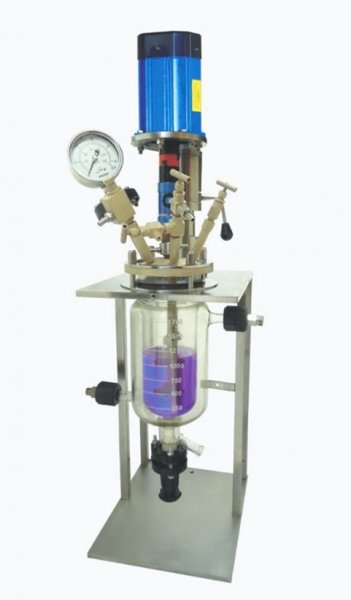
Volume: 500 mL, 1 L & 2 L reactors
Pressure: Up to 10 bar
Temperature: Up to 200 °C
Material: Borosilicate glass cylinder with other wetted parts of SS 316, SS with Tantalum Lining & Hastelloy C
Applications:
Nitration, Sulfonation, Esterification, Oxidation, Hydrolysis, Grignard reaction, Polymerization, Acid-base neutralization, Hydrogenation, Photochemical reaction, Condensation reaction, etc.
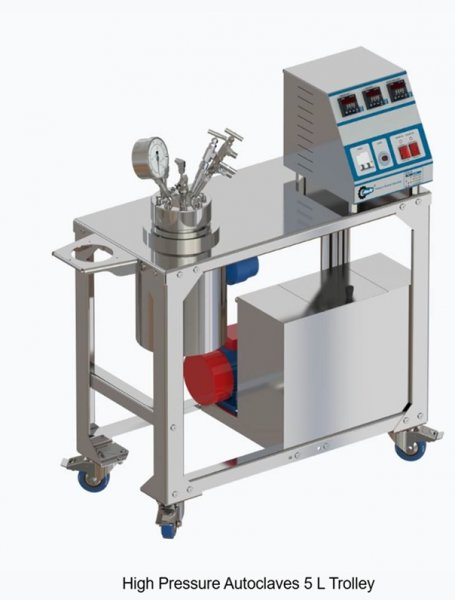
Customized pressure vessels above 350 bar or >100 L volume can be fabricated. Process systems often require high pressure vessels not only for reactors but also for dosing tanks,
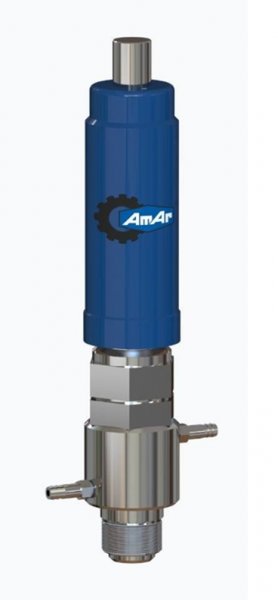
For high pressure applications: Up to 700 bar pressure
Torque: High torque magnetic drives from 1 to 1,000 Nm
Speed: Up to 3,000 RPM
Materials: SS316, Hastelloy C, Inconel, etc.
Scope: Compact inline motor & magnetic drive for 50 ml–10,000 L reactors
Design: Custom built agitator with magnetic drive, motor, shaft & impeller
Application: Available for 100 ml to 100 L round bottom flask/glass reactors
Vacuum: These couplings/mixers can withstand full vacuum during continuous distillation
Temperature: Up to 200 °C & 500 °C with cooling jacket
Connections: Available in different neck sizes; B24, B29, 834, 845, etc.
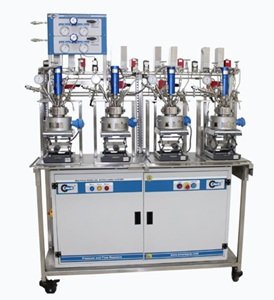
Parallel synthesizers are the next step in scale-up from our React-7 models, allowing larger quantities of typically liquid-phase reactions to be handled in parallel. Top-mounted stirrers enable safe operation under viscous, high-temperature, and high-pressure conditions, even with corrosive reagents, thanks to a wide variety of material options.
These reactors are the ideal choice for experimental design (DoE) programs aimed at optimizing synthesis conditions or screening catalysts. Independent gas pressure control is available for each reactor. Both jacketed and coil-based heating/cooling systems are supported, along with automatic data logging and PID control.
Process development teams frequently use these systems to close material balance models and to evaluate changes in heat and mass transfer when scaling from milliliters to liters.
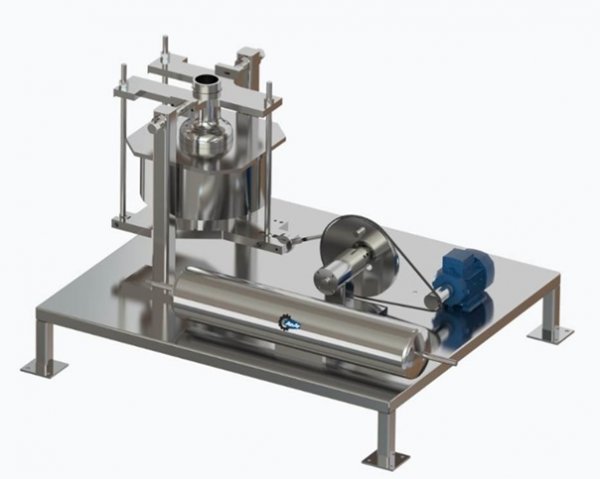
A Shaker Hydrogenator is a laboratory-scale reactor used for catalytic hydrogenation reactions. It consists of a pressure vessel that can hold a liquid substrate, catalyst, and hydrogen gas, while a mechanical shaking mechanism ensures proper mixing. It is a long-tested design and commonly used for smaller scale hydrogenations in research and development—e.g., reducing double bonds, nitro groups, or aromatic rings. Due to its simplicity and efficiency, it is ideal for exploratory synthesis and testing catalytic activity in hydrogenation reactions.
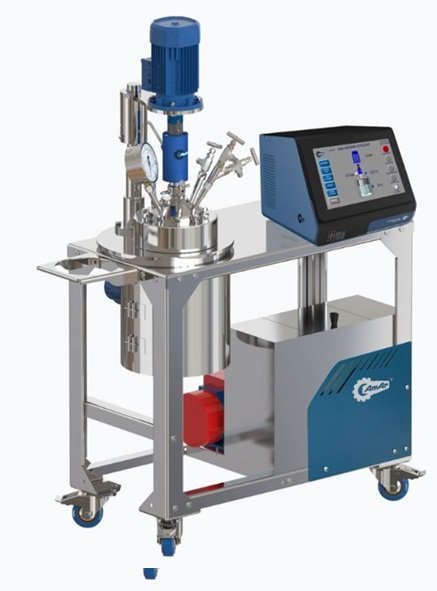
A Stirred Pressure Reactor, or Autoclave, is a specialized reactor designed for conducting chemical reactions under elevated pressures and temperatures. A mechanical agitator ensures efficient mixing, enhances mass transfer, and accelerates reaction kinetics, while a jacket or internal cooling coil provides excellent heat transfer. Often constructed from high-strength, corrosion-resistant materials such as stainless steel or Hastelloy, these vessels are essential in process development and scale-up for operations such as hydrogenation, polymerization, and catalytic transformations.
They are widely used in the chemical, petrochemical, and pharmaceutical industries, serve as a key element of process intensification strategies, and can be operated in both batch and continuous modes.