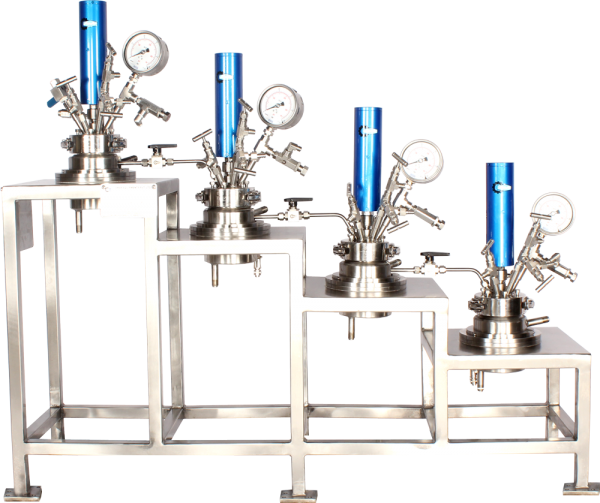
| Features |
| Volume : 500 ml to 1000 ltr |
| Pressure Range : up to 100 bar |
| Temperature Range : -30°C to 300°C |
| Flow Rate : Upto 10,000 lph |
| Material : SS316, Hastelloy C276 |
| Multiple CSTRs connected in series (cascaded setup) for faster reactions. |
| Sampling valves in each cell to monitor reaction progress. |
| Can handle slurries in high concentration. |
| Residence times could range from a few seconds to as high as few hours. |
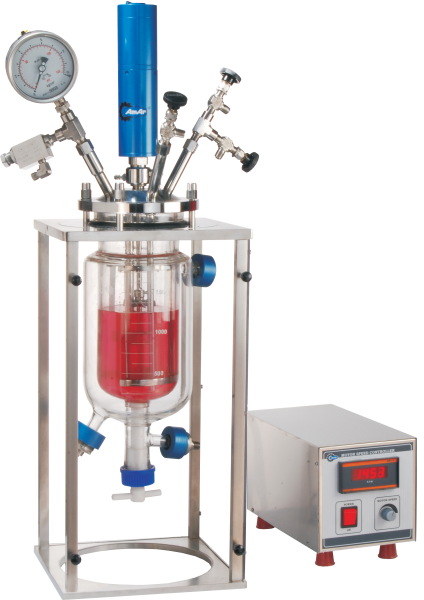
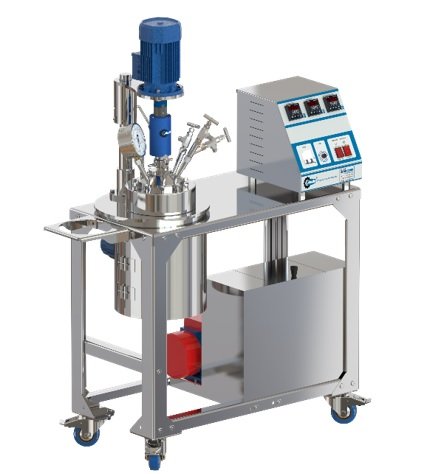
Stirred Pressure Autoclave Reactors are used in various industries and applications that require mixing, controlled temperature & pressure conditions, & efficient heat & mass transfer.
| Features |
| Volume: 100 ml to 100 ltr volume reactors. |
| Pressure Range: up to 350 bar |
| Temperature Range: up to 500°C |
| Material: SS-316, Hastelloy, Monel, Nickel, Inconel, Titanium, Zirconium. |
| Sealing: High torque zero leakage Magnetic Drive Coupling. |
| Standards & Certification: Ex-proof, CE certified / CSA certified electricals, PED / ASME U Stamp certified pressure reactors can be quoted on request. |
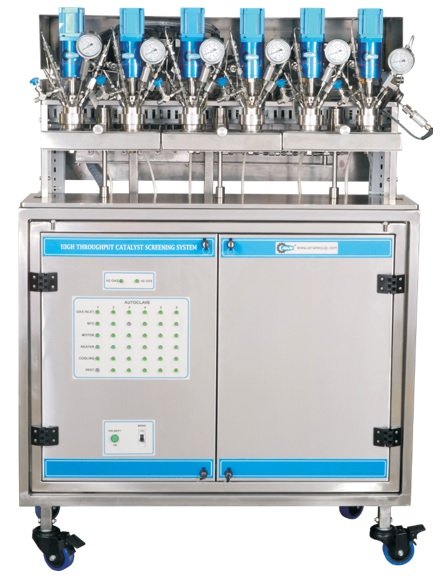
| Features |
| Volume: 100 ml to 2 ltr volume reactors. |
| Combination: This can be in either 4 nos. or 6 nos. reactors in parallel or series of either same or different specifications. |
| Pressure Range: up to 350 bar for each reactor. |
| Temperature Range: up to 500°C for each reactor. |
| Material: SS-316, SS-316L, Hastelloy, Titanium, Monel, Inconel etc. |
| Sealing: High torque zero leakage Magnetic Drive Coupling for each reactor. |
| Standards & Certification: Ex-proof, CE certified / CSA certified electricals, PED / ASME U Stamp certified multiple reactor systems can be quoted on request. |
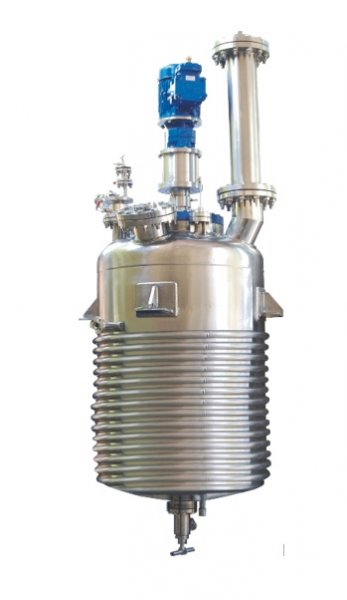
| Features |
| Volume: 100 ltr to 10000 ltr working volume pilot scale and plant scale reactors tailor made to customer's requirement. |
| Pressure Range: up to 100 bar |
| Temperature Range: up to 350°C |
| Material: SS-316, SS-316L, Hastelloy, Titanium (lined or solid plates), Monel, Inconel etc. |
| Impeller Types: High mass transfer gas induction impeller with hollow shaft, pitch blade turbine impeller for liquid-liquid reactions. |
| Sealing: High torque zero leakage Magnetic Drive Coupling. |
| Standards & Certification: Ex-proof, CE / CSA certified electricals, PED / ASME U Stamp certified pressure reactors can be quoted on request. |
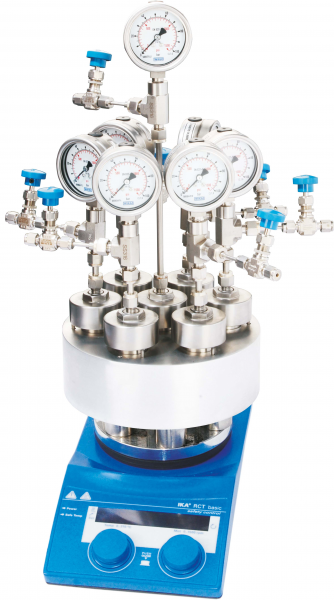
| Features |
| Volume: 25 ml x 7 reactors with independent lids. |
| Pressure Range: up to 100 bar for each reactor |
| Temperature Range: up to 200°C |
| Heating: shall be common for all reactors using hot plate. |
| Maximum Stirring Arrangement speed: up to 1000 RPM. |
| Material: SS-316, Hastelloy, Inconel, Titanium etc. |
| Sealing: Threaded sealing with either Viton or Kalrez ‘O’ ring |
| Stirring Arrangement: All the reactors have a common bottom stirring arrangement having upto 1000 RPM using magnetic hot plate stirrer. |
| Very compact & economical system |
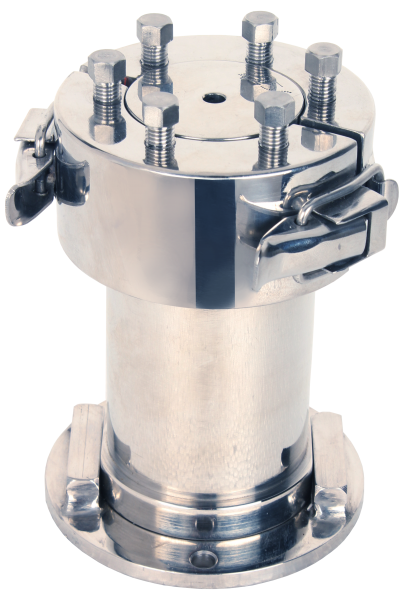
| Features |
| Volume: 50 ml to 750 ml |
| Pressure Range: up to 200 bar |
| Temperature Range: up to 250°C |
| Material: SS-316 with PTFE Liner and PTFE cap |
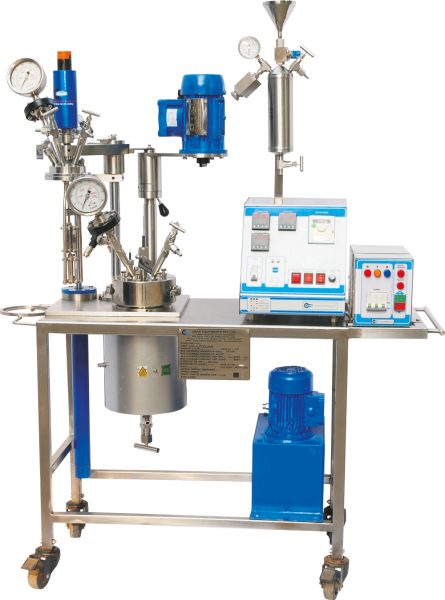
| Features |
| Volume: 100 ml to 100 ltr volume reactors. |
| Pressure Range: up to 350 bar |
| Temperature Range: up to 600°C |
| Material: SS-316, Hastelloy, Monel, Nickel, Inconel, Titanium, Zirconium. |
| Sealing: High torque zero leakage magnetic drive coupling. |
| Heating: can be either through electrical heater or jacket. |
| Standards & Certification: Ex-proof, CE certified / CSA certified electricals, PED / ASME U Stamp, Atex certified systems is optional. |
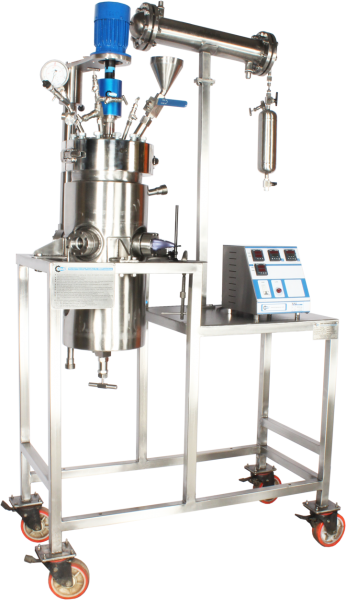
| Features |
| Volume: 100 ml to 100 ltr volume reactors. |
| Pressure Range: up to 350 bar |
| Temperature Range: up to 100°C |
| Material: SS-316, SS-316L, Hastelloy, Titanium, Monel, Inconel etc. |
| Sealing: High torque zero leakage magnetic drive coupling Specially designed gas induction impellers for introducing gas into the mixture to aid the formation of gas hydrates. |
| Heating: can be either through electrical heater or jacket. |
| Standards & Certification: Ex-proof, CE certified / CSA certified electricals, PED / ASME U Stamp, Atex certified systems can be quoted on request. |
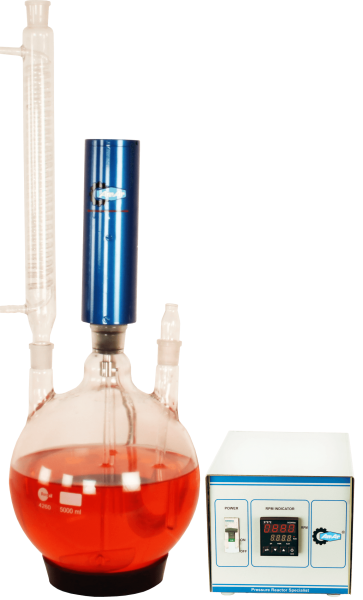
| Features |
| For high pressure applications up to 700 bar pressure. |
| For high vacuum distillation in Round Bottom Flask available for 50 ml - 10,000 ltr. Reactors. |
| High torque magnetic drives from 1 to 1000 Nm. |
| Materials of SS316, Hastelloy C, Inconel, Titanium etc. |
| Compact inline motor & magnetic drive for 50 ml - 100 ltr reactors. |
| Suitable for glass/metal reactors / autoclaves / fermenters/ thin film evaporators etc. |
| Zero leakage hence zero maintenance & zero breakdown for years. |
| Very useful for long or round the clock reactions as in gland/mechanical sealing if there is any leakage midway, the whole batch may go waste. |
| Noiseless, vibration free & flexible hence overload results in coupling slippage safeguarding the motor. |
| Safe for toxic / hazardous & expensive chemicals. |
| No friction losses hence lower power consumption. |
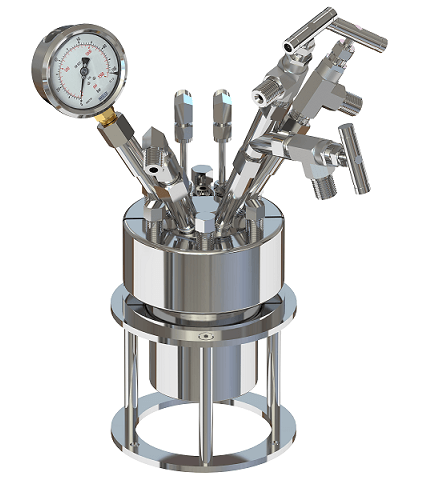
| Features |
| Volume: 25 ml to 100 ltr volume reactors |
| Pressure Range: up to 350 bar |
| Temperature Range: up to 500°C |
| Material: SS-316, Hastelloy, Monel, Nickel, Inconel, Titanium, Zirconium. |
| Standards & Certification: Ex-proof, CE certified / CSA certified electricals, PED / ASME U Stamp certified pressure reactors can be quoted on request. |
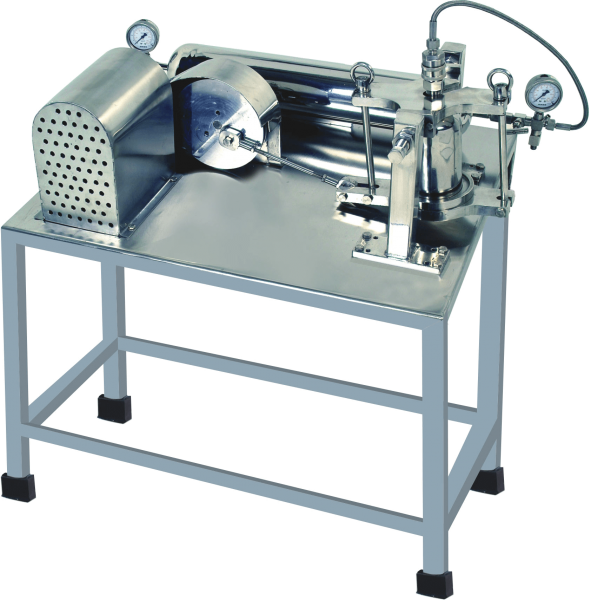
| Features |
| Volume: 500 ml to 2 ltr volume reactors. |
| Pressure Range: up to 20 bar for metal vessels and 3 bar for glass vessels. |
| Temperature Range: up to 200°C for metal vessels and up to 150°C for glass vessels. |
| Material: SS-316 or Hastelloy C. |
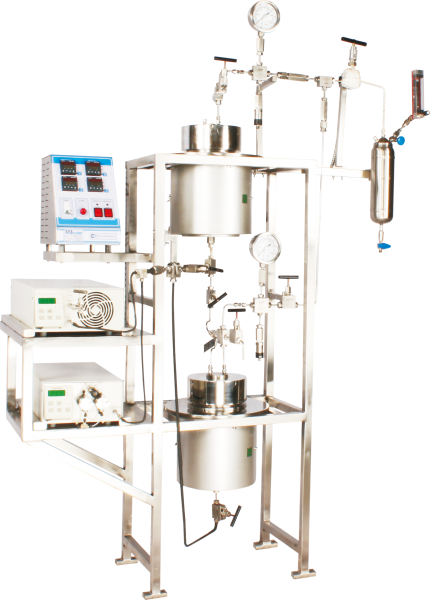
| Features |
| Volume: 100 ml to 1000 ltr volume reactors. |
| Pressure Range: up to 700 bar |
| Feed Capacity: 0.24 kg/day to 2400 kg/day |
| Standards & Certification: Ex-proof, CE certified / CSA certified electricals, PED / ASME U Stamp certified systems optional. |
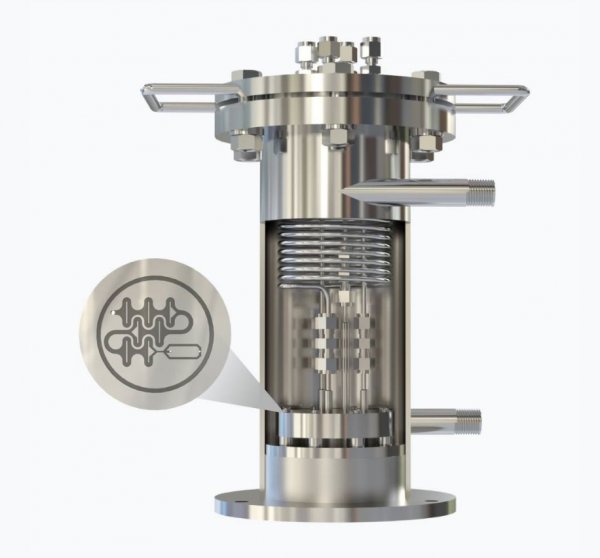
LabFLO™ is a convenient reactor for lab-scale proof-of-concept studies. It consists of a 1 ml micro-mixer and a 10 ml residence coil. These components are immersed in a circulating fluid bath to maintain process temperature. The LabFLO™ reactor can carry out reactions including nitration, sulfonation, diazotization, oxidation, and reduction — all using microliter-scale raw materials.
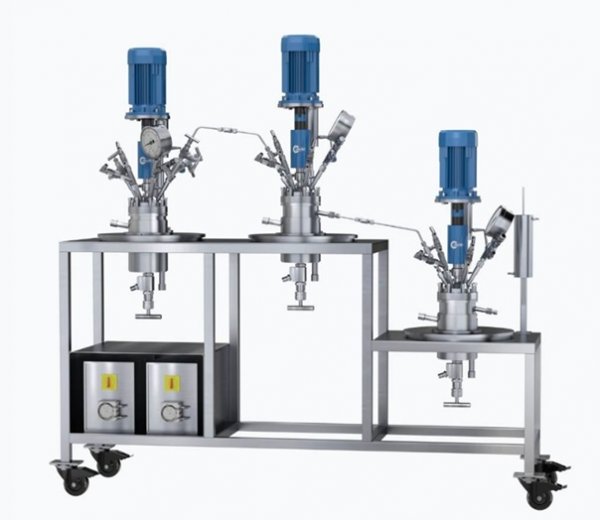
Continuous Stirred Tank Reactors (CSTRs) are agitated, tank-like reactors that are widely used in chemical processes for reactions that require continuous input of reactants and removal of products. The reactor maintains a uniform composition and temperature through constant mixing. Ideal CSTRs operate at steady state with perfect mixing, leading to the same conditions throughout the reactor. These are an excellent choice for large tonnage continuous processes, with medium speed to slow reactions and especially for liquid systems. They can handle solids and viscous fluids without problems and can be easily cascaded to give PFR like behaviour.
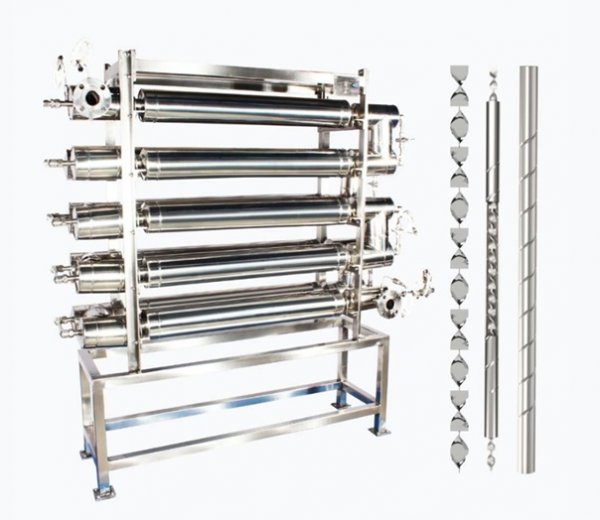
The CorFLO™ reactor is particularly suited for mixing-intensive processes at commercial scale.
The CorFLO™ is a passive mixing device, meaning the energy for mixing and enhanced heat transfer is derived from the kinetic head of the flowing fluid itself.
It consists of a number of corrugated tubes, each embedded with kinetics-type static mixers.
These provide unparalleled mixing and heat transfer even at low flow rates, along with very narrow residence time distributions.
Reactions: Excellent for nitrations, ozonolysis, and especially suitable for reactions
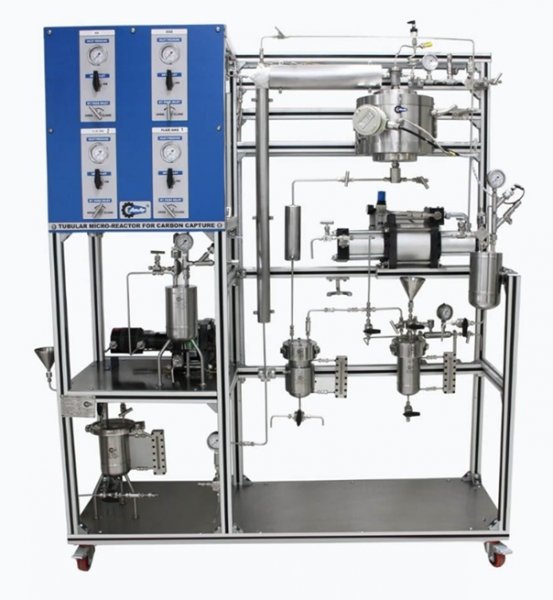
Fixed Bed Reactor Systems – From Pilot to Industrial Scale
High-performance systems engineered for high-temperature, high-pressure applications
Our Fixed Bed Reactors are specially designed for demanding catalytic and thermal processes involving gas or liquid phase reactants.
Suitable for catalyst screening to biomass gasification and everything in between.
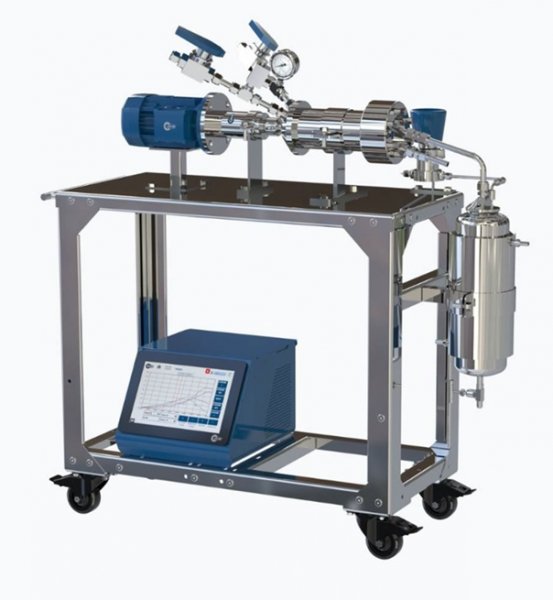
Take Your Processes to the Next Level with the MACFLO™ Reactor
MACFLO™ — The patented multiphasic agitated contactor reactor, designed for demanding flow applications.
Bring together innovation and efficiency in your research and production processes.
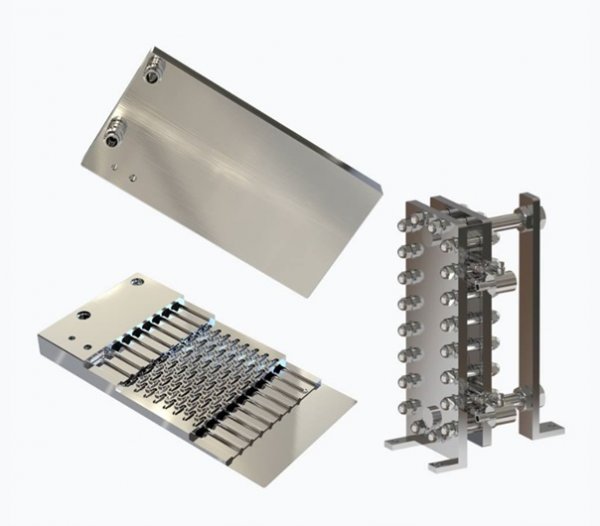
Ideal for:
Gas-liquid and liquid-liquid multiphase reactions
Advantage: Much greater surface area-to-volume ratio and heat transfer area than comparable reactors, achieved through our innovative space-filling patented design
Description:
The MicroFLO™ reactor is a plate-type reactor incorporating the split and recombine strategy for effective mixing. Its high heat transfer area per unit volume ensures near-isothermal conditions even for very fast, highly exothermic reactions like lithiations, Grignard synthesis, and nitrations.
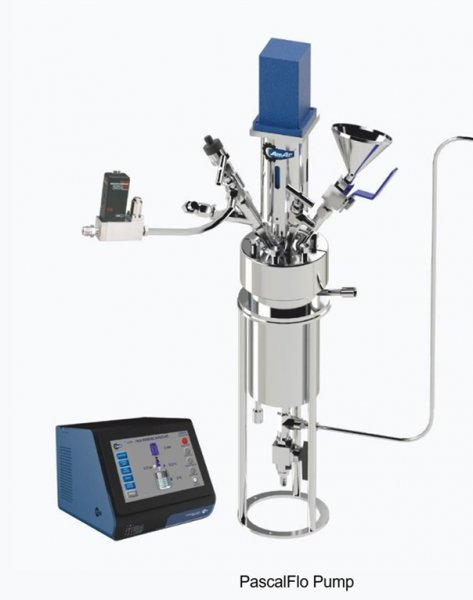
PascalFLO™ – Akışkanlarınızı kontrol etmenin akıllı, yenilikçi ve güvenilir yolu.
PascalFLO™ – Next-Generation Flow Control Solution
The patented PascalFLO™ system stands out with its ability to precisely control the flow of liquids or slurries without the need for a flow meter or control valve.
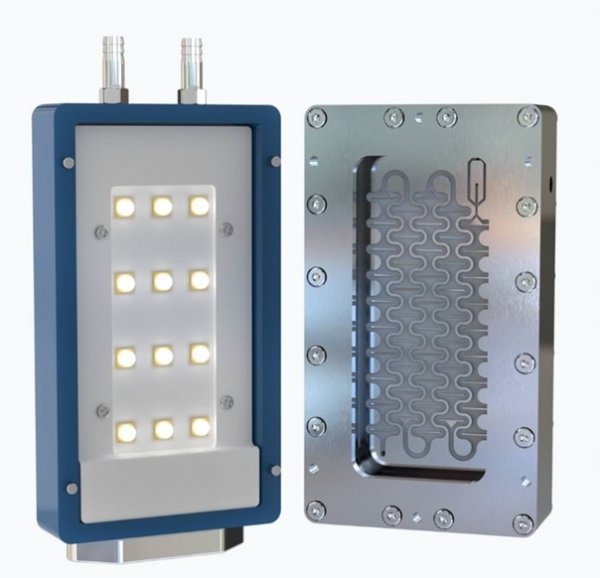
The PhotoFLO™ reactor, based on our compact, space-filling MicroFLO design, is engineered to maximize photon efficiency.
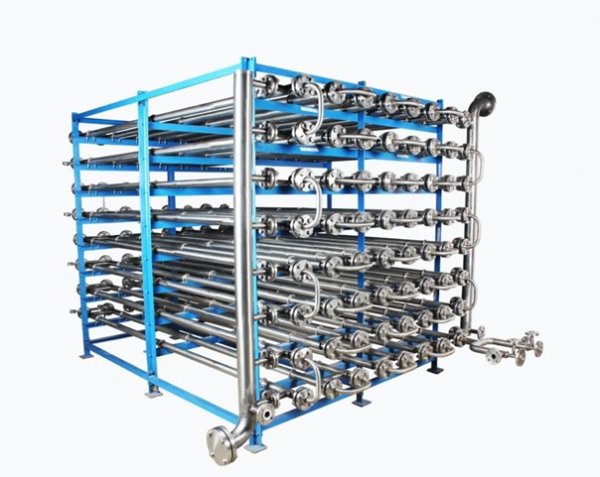
The PinchFLO™ tubular reactor is ideal for liquid-liquid and gas-liquid exothermic reactions with high throughput at commercial scale.
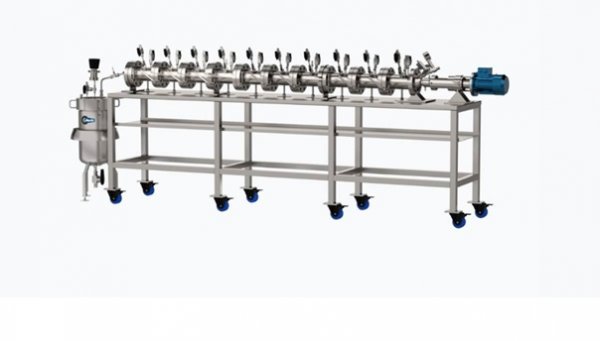
The SlurryFLO™ Reactor is a versatile continuous flow reactor designed for challenging slurry reactions and ideal for process intensification. Its partitioned cell design features impellers installed on a single shaft, enabling active agitation that ensures thorough dispersion of the reaction media. This configuration maximizes heat transfer to the jacketed reactor walls, maintaining precise isothermal conditions essential for multi-phase flow processes.
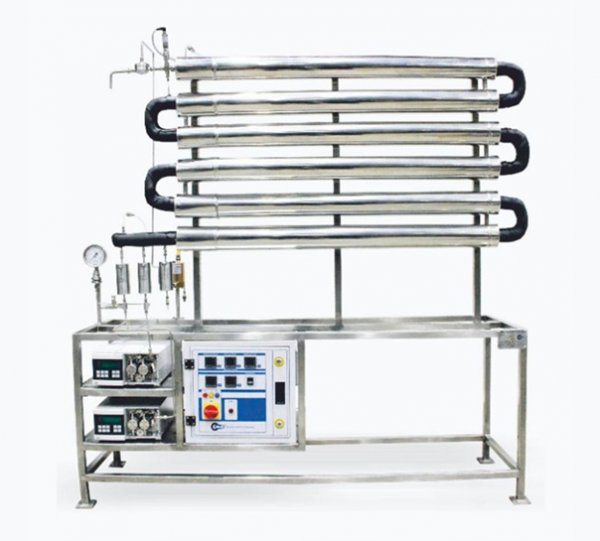
Plain tube or plain tube with static mixer for better mixing.
Volume: 50 ml to 1,000 L
Flow Rates: Up to 10,000 LPH
Pressure: Up to 100 bar
Temperature: -50 °C to 350 °C
Material: SS-316 / Hastelloy
Design: Double pipe, shell & tube jacket configuration
Applications: Suitable for single-phase reactions such as:
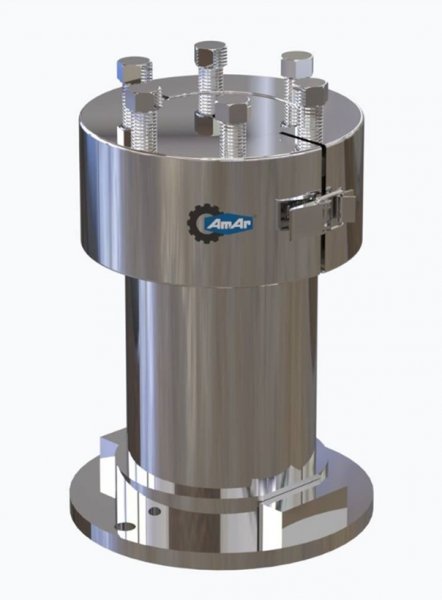
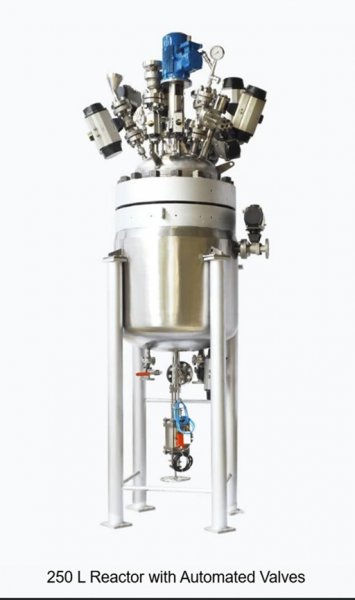
Alkylation, Amination, Bromination, Carboxylation, Catalytic Reduction, Chemical Synthesis, Chlorination, Dehydrogenation, Esterification, Ethoxylation, Halogenation, Hydrogenation, Material Synthesis, Methylation, Nitration, Oxidation, Ozonization, Polymerization, Sulphonation, etc.
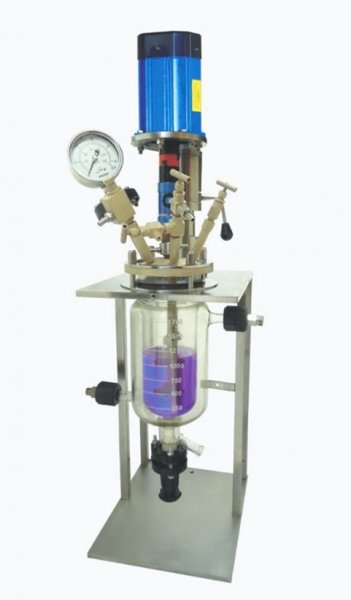
Volume: 500 mL, 1 L & 2 L reactors
Pressure: Up to 10 bar
Temperature: Up to 200 °C
Material: Borosilicate glass cylinder with other wetted parts of SS 316, SS with Tantalum Lining & Hastelloy C
Applications:
Nitration, Sulfonation, Esterification, Oxidation, Hydrolysis, Grignard reaction, Polymerization, Acid-base neutralization, Hydrogenation, Photochemical reaction, Condensation reaction, etc.
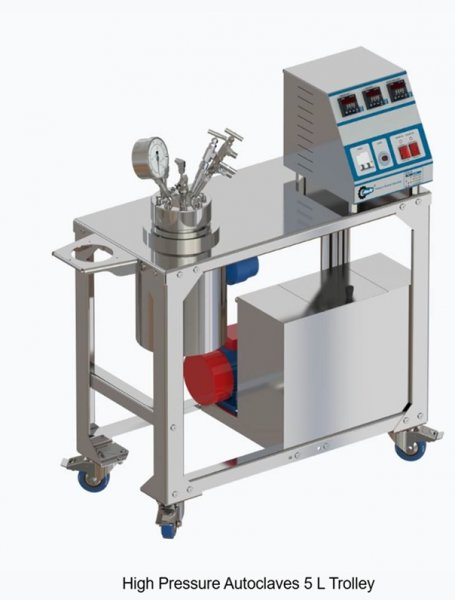
Customized pressure vessels above 350 bar or >100 L volume can be fabricated. Process systems often require high pressure vessels not only for reactors but also for dosing tanks,
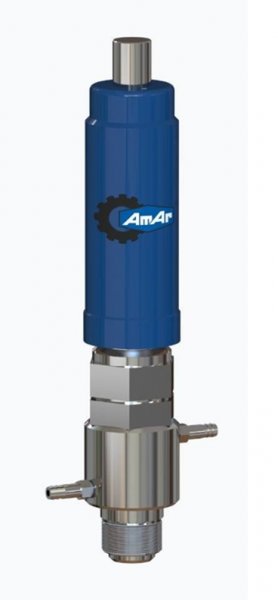
For high pressure applications: Up to 700 bar pressure
Torque: High torque magnetic drives from 1 to 1,000 Nm
Speed: Up to 3,000 RPM
Materials: SS316, Hastelloy C, Inconel, etc.
Scope: Compact inline motor & magnetic drive for 50 ml–10,000 L reactors
Design: Custom built agitator with magnetic drive, motor, shaft & impeller
Application: Available for 100 ml to 100 L round bottom flask/glass reactors
Vacuum: These couplings/mixers can withstand full vacuum during continuous distillation
Temperature: Up to 200 °C & 500 °C with cooling jacket
Connections: Available in different neck sizes; B24, B29, 834, 845, etc.
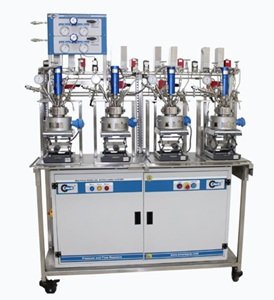
Parallel synthesizers are the next step in scale-up from our React-7 models, allowing larger quantities of typically liquid-phase reactions to be handled in parallel. Top-mounted stirrers enable safe operation under viscous, high-temperature, and high-pressure conditions, even with corrosive reagents, thanks to a wide variety of material options.
These reactors are the ideal choice for experimental design (DoE) programs aimed at optimizing synthesis conditions or screening catalysts. Independent gas pressure control is available for each reactor. Both jacketed and coil-based heating/cooling systems are supported, along with automatic data logging and PID control.
Process development teams frequently use these systems to close material balance models and to evaluate changes in heat and mass transfer when scaling from milliliters to liters.
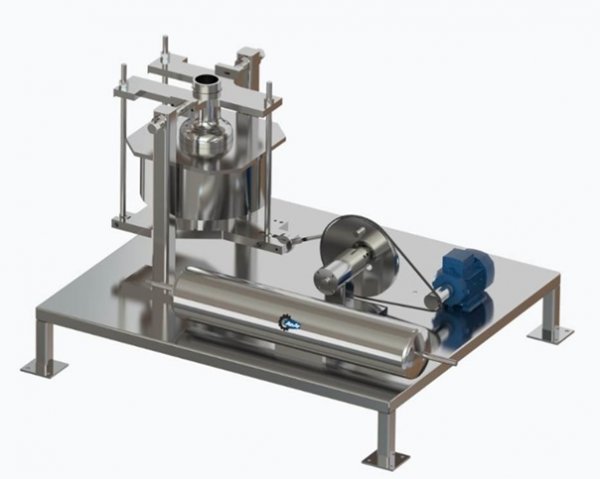
A Shaker Hydrogenator is a laboratory-scale reactor used for catalytic hydrogenation reactions. It consists of a pressure vessel that can hold a liquid substrate, catalyst, and hydrogen gas, while a mechanical shaking mechanism ensures proper mixing. It is a long-tested design and commonly used for smaller scale hydrogenations in research and development—e.g., reducing double bonds, nitro groups, or aromatic rings. Due to its simplicity and efficiency, it is ideal for exploratory synthesis and testing catalytic activity in hydrogenation reactions.
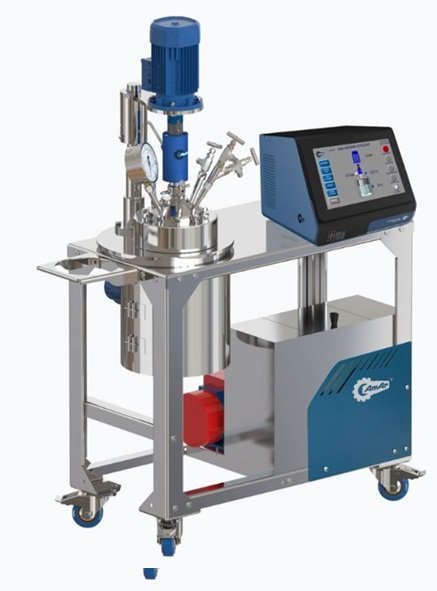
A Stirred Pressure Reactor, or Autoclave, is a specialized reactor designed for conducting chemical reactions under elevated pressures and temperatures. A mechanical agitator ensures efficient mixing, enhances mass transfer, and accelerates reaction kinetics, while a jacket or internal cooling coil provides excellent heat transfer. Often constructed from high-strength, corrosion-resistant materials such as stainless steel or Hastelloy, these vessels are essential in process development and scale-up for operations such as hydrogenation, polymerization, and catalytic transformations.
They are widely used in the chemical, petrochemical, and pharmaceutical industries, serve as a key element of process intensification strategies, and can be operated in both batch and continuous modes.
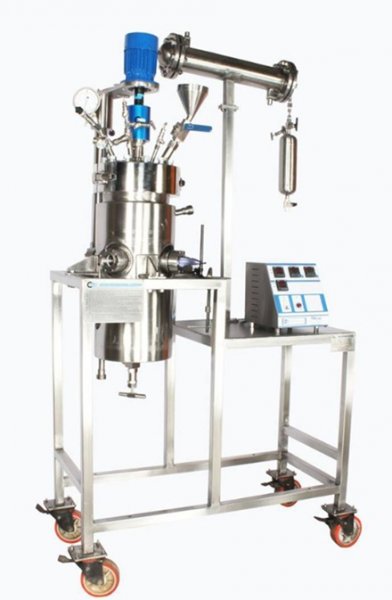
Gas hydrates are crystalline compounds in which gas molecules, typically methane, ethane, or carbon dioxide, are trapped within a lattice of water molecules under high-pressure and low-temperature conditions.
They are commonly found in marine sediments and permafrost regions. In the oil and gas industry, gas hydrates can form blockages in pipelines but also represent a potential future energy source due to the large amounts of methane stored in hydrate deposits.
Research into their formation, dissociation, and exploitation is ongoing and requires specially designed equipment capable of withstanding very high pressures. Our Gas Hydrate systems are designed to support these applications.
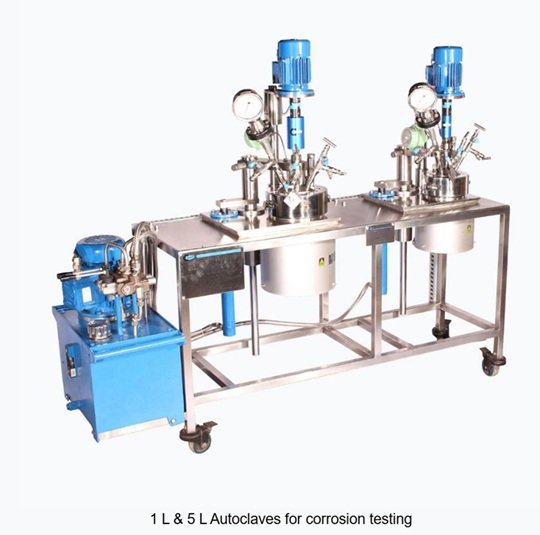
Autoclave System Features
Applications



 More >